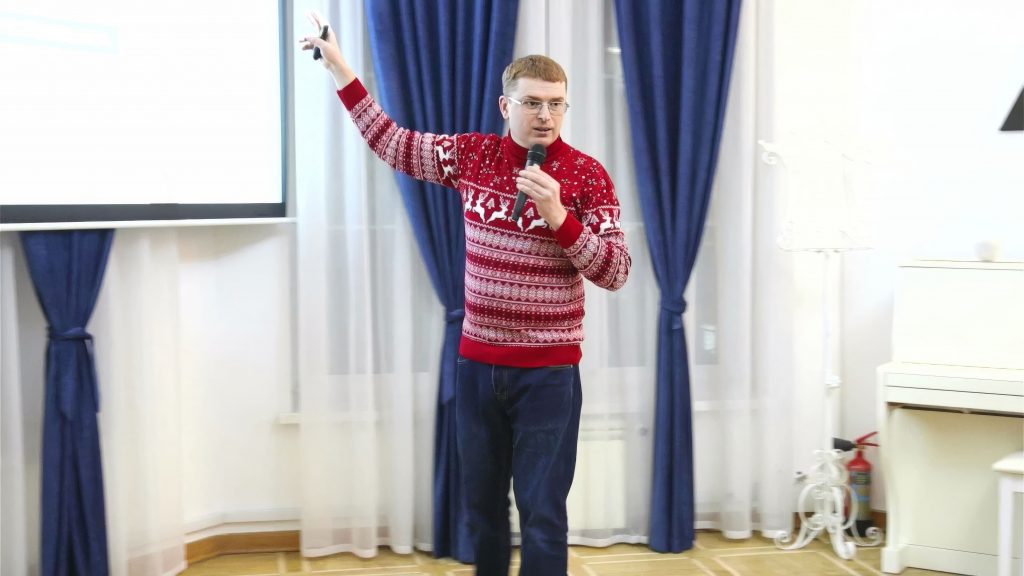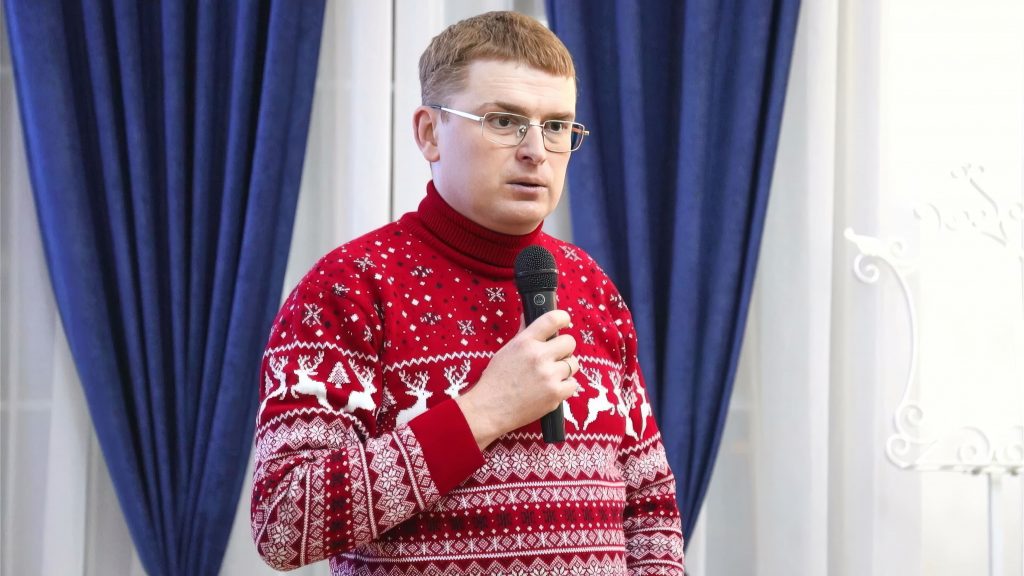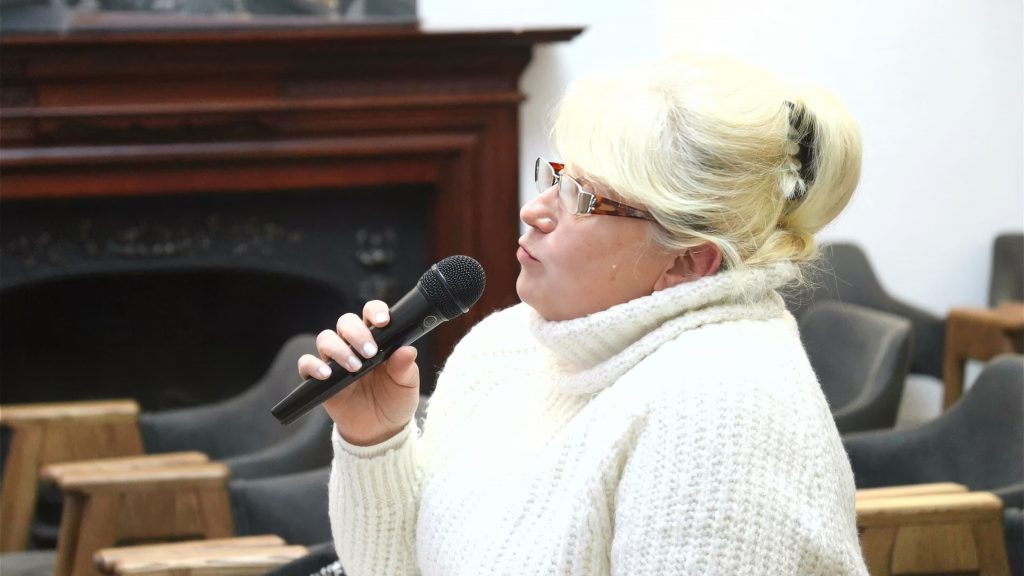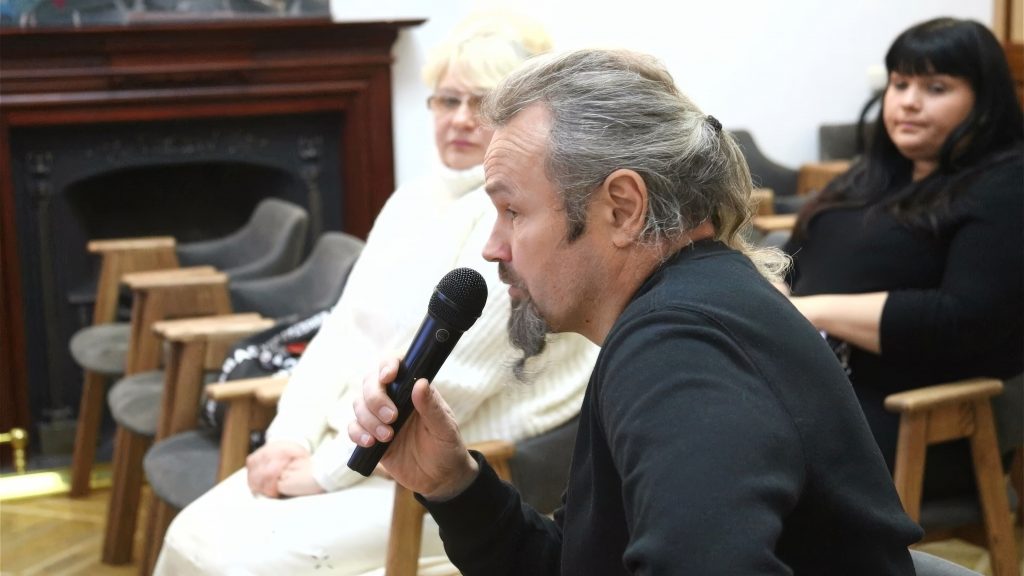
UIF hosted the third meeting within the framework of the Other Education project. The event brought together representatives of government organizations, educational institutions, experts, and civil society activists to discuss how the educational concept can improve economic processes, meet modern challenges, and integrate previous experience into the future.
Vitaliy Khromets, author of the study, Doctor of Philosophy, and expert on the development of educational legislation, stressed the importance of shifting from the idea of a “new world” to the idea of a “different world,” emphasizing the fundamental difference between these concepts. He noted that the concept of “new” is opposed to “old” and is often based on a radical rejection of previous experience. Instead, the “other world” seeks to consider the past’s legacy and integrate it into new forms and content.
“Other education is not only about changing approaches to learning but also about a deeper understanding of how society affects the individual. Education should take into account that each person is unique, but at the same time, they are part of a social, economic, and cultural context that imposes its own limits and opportunities,” the speaker stressed.
Particular attention was paid to conceptual analysis, which helps reveal the basic ideas and structures that shape educational processes. Vitaliy Khromets emphasized that no new idea emerges in a vacuum but always relies on previous experience. “Even radical innovators such as Descartes, seeking to completely abandon the old, unconsciously built their concepts on the scholastic method,” he said.
Key points of the presentation:
- Education should consider each individual’s uniqueness while acknowledging the influence of the social environment, which sets opportunities and constraints.
- Integrating the legacy of the past into the “other world” avoids the false radicalism inherent in the idea of a “new world.”
- Society determines educational processes through three main roles: economy, politics, and culture, which shape the conditions for personal fulfillment.
Main ideas:
Difference or novelty.
- The traditional notion of a “new world” is often associated with a radical separation from the past. However, our concept of a “different world” emphasizes synthesis—taking into account previous experience to create alternative models of the future.
- Otherness does not oppose the old but integrates the best ideas of the past into new systems.
Educational context.
- The study examines the genesis of educational concepts in Western civilization and their impact on Ukrainian lands. Institutions such as the Kyiv-Mohyla Academy became conduits of Western values while adapting them to the local context.
- The development of education in Ukraine has historically been shaped by the intersection of several civilizations, combining Western and local traditions.
An individual in the system of society.
- Human uniqueness is manifested only within the limits of available social opportunities. Different social, economic, and cultural conditions create different individual development scenarios.
- We conducted a thought experiment to show how the manifestation of individual abilities changes depending on the social context.
The discussion also addressed a number of important issues:
Education under martial law:
- How do educational needs change in the context of losing a part of the economy?
- Is there a plan to train specialists for the military-industrial complex?
- How can we ensure rapid training for defense sectors?
Blended learning:
- What are the advantages and disadvantages of distance education?
- Is the dual learning system effective when students work and study at the same time?
Interaction between education and the labor market:
- Why does modern education often fail to meet market demands?
- How can we bridge the gap between educational institutions and employers?
The problem of the devaluation of higher education:
- What should be done about the oversaturation of the market with graduates?
- How can we motivate students to work in their field of study after graduation?
In the 21st century, education is facing new challenges:
Devaluation of higher education: A large number of graduates do not find jobs in their field of study because the market is oversaturated.
- The gap between education and the economy: The lack of connection between educational institutions and the labor market leads to a loss of motivation among students and a decrease in the prestige of diplomas.
One possible solution is to introduce dual education, a system that combines study and work. This model has been successfully implemented in Germany, where students simultaneously acquire knowledge and practical experience in real-world settings.
Conclusion
Education is the foundation for the development of society, and its adaptation to new realities is the key to success. The different world we are building requires new approaches to education, but at the same time, we cannot ignore the experience of the past. The solution to modern problems is possible only through the integration of traditional and innovative methods, creating a system capable of meeting today’s challenges.
The results of our research open up prospects for the development of new educational and cultural approaches. A different education is a way of thinking that encourages finding non-trivial solutions to global and local processes.
We invite the scientific community and interested parties to join the discussion and research on this topic.