

Summary of the topic
Although the war, the breakdown of logistics, climate risks, and structural vulnerability have led to a decline in the share of Ukraine’s agricultural sector in GDP from 8.8% in 2013 to 7.1% in 2024, it remains the foundation of the national economy and one of the few sectors capable of ensuring the country’s recovery and economic resilience.
At the same time, crop production is the most sensitive to external shocks, whereas the livestock sector remains stable owing to its orientation toward domestic consumption. Fluctuations in indices from 74.7% to 116.4% in 2013–2024 are attributable not only to the consequences of the war but also to accumulated challenges in the agricultural structure, which require changes to the very model of development.
If we analyze the experience of Poland, Romania, Slovakia, and Hungary, we will see that the sustainable growth of their agricultural sectors after joining the EU became possible thanks to a combination of several factors:
- Economic support for farmers;
- Institutional development;
- Modernization of production;
- Implementation of the environmental standards of the EU Common Agricultural Policy.
The decisive factor was the coordinated work of all institutions—from the functioning of payment agencies to systems of farm accounting and modern advisory services.
Ukraine is already moving in the same direction, forming the State Agrarian Register, the Paying Agency, and a digital management infrastructure.
The next steps should be:
- Launching a full-fledged agricultural knowledge and innovation system.
- Combating corruption risks in state support.
- Transitioning to a model built on added value: agricultural processing, the bioeconomy, green energy, and sustainable farming.
Systemic modernization of agriculture, drawing on the European experience, can enable Ukraine to develop a competitive, environmentally balanced, and socially resilient agricultural sector integrated into the common European space.
Keywords: sustainable development, agricultural sector, agriculture, EU Common Agricultural Policy, transformation.
Transformation of Ukraine’s agricultural sector in the context of European integration
Ukraine’s agriculture is undergoing a difficult but necessary stage of modernization. European integration introduces new requirements — from the transition to environmentally safe technologies to the rational use of natural resources.
Under such conditions, agricultural policy must not only adapt to European standards but also build its own model of sustainable development capable of ensuring the sector’s efficiency and competitiveness.
One key indicator of change is the agricultural sector’s share of GDP. In 2013–2024 it fluctuated significantly: from 8.8% in 2013 to 7.1% in 2024, reaching a maximum of 12.1% in 2015, after which a gradual decline began (Fig. 1). The short recovery in 2021 (10.9%), driven by export growth, proved to be unstable — already in 2022 the indicators dropped sharply due to the war, the destruction of logistics, and the contraction of production.
In 2024, the share of agriculture, forestry, and fisheries in GDP amounted to 7.1%. Data for the first half of 2025 show a further decline to 2.5%, 0.2 percentage points lower than in the same period of the previous year [6].
The data indicate that, despite the agricultural sector’s strategic importance, its role in the economy’s structure is diminishing.
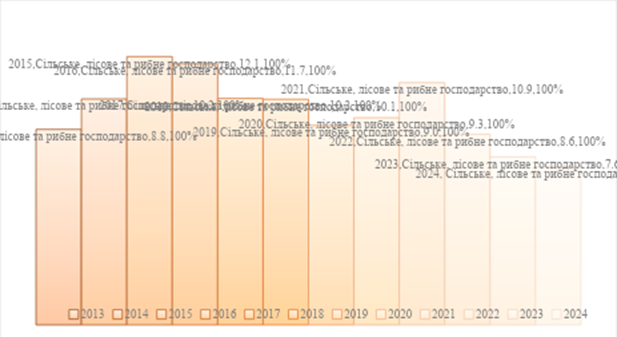
Fig. 1. Share of agriculture, forestry, and fisheries in Ukraine’s GDP
(at current prices), %
Source: Calculated and constructed based on [6].
Comparison of Ukraine with the countries of Central and Eastern Europe
A comparison with countries in Central and Eastern Europe that have already completed European integration clarifies where Ukraine’s agricultural sector is heading. All these states, after joining the EU, experienced a similar trend: a gradual decrease in the share of agriculture in GDP. However, this decline did not signify a deterioration of the sector; instead, it resulted from modernization and increased productivity across the economy as a whole.
In Poland, the share of the agricultural sector ranged from 2.4–3.3%; in Hungary, from 2.4–4.4%; and in Slovakia, from 1.5–2.6%. The most illustrative example is Romania: a country with a traditionally strong agricultural sector, whose share fell from 11.9% in 2003 to 3.3% in 2024 [7].
All these indicators point to a general pattern:
In the context of EU integration, structural economic transformation is underway: resources are shifting toward higher-value sectors, yet the agricultural sector remains significant despite its declining share of GDP.
A comparison with Ukraine shows a clear structural gap. In 2013–2021, the level of “agriculturalization” of the Ukrainian economy was 3–5 times the average across the countries analyzed. On the one hand, this reflects dependence on the agricultural sector, which makes the economy vulnerable to threats posed by war, logistical shocks, and global food price fluctuations. On the other hand, this gap indicates substantial potential:
- Expansion of agricultural processing;
- Creation of added value within the country;
- Development of the bioeconomy and green energy.
In this context, analyzing the dynamics of agricultural production in Ukraine becomes particularly important. This analysis enables the identification of internal trends, the understanding of the depth of structural imbalances, and the determination of which modernization directions are most relevant to Ukrainian producers (Fig. 2).
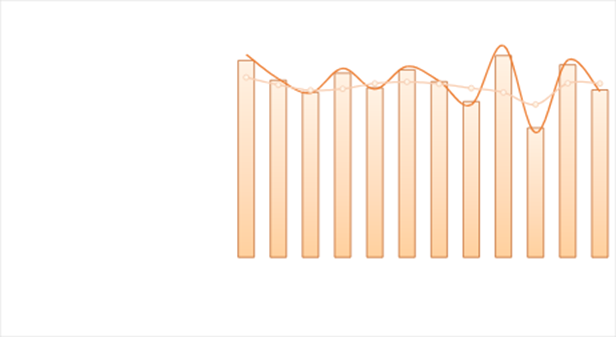
Fig. 2. Index of agricultural production in Ukraine (at constant 2021 prices; % compared to the previous year), %
Source: Constructed based on [8].
Dynamics of agricultural production in Ukraine
Ukraine’s agricultural production index fluctuated extremely sharply during 2013–2024: from a peak of 116.4% in 2021 to a collapse to 74.7% in 2022.
Such fluctuations are caused by objective factors —
- Wartime shocks
- Destruction of logistics
- Loss of access to part of the land
- Increasing climate risks.
It is not surprising that, nine months into 2025, the index had recovered only to 86%, indicating a gradual yet prolonged return of the sector to stability.
Structurally, Ukrainian agricultural production has traditionally relied on crop production. That is why the decline in the crop production index from 122,3% in 2021 to 71,8% in 2022 became one of the most telling indicators of the sector’s blow.
The reduction of sown areas in the eastern and southern regions, the loss of access to machinery and infrastructure, and high production risks have formed the very “narrowing of the base” from which the sector is still recovering.
Against this background, livestock production appears relatively stable. Its production indices have remained within the 95–103% range for more than a decade, and in 202,5 they amount to 95.6%. More minor fluctuations in crop production are attributable to more predictable domestic consumption and a relatively low dependence on external markets. In the years of crisis, this structural feature became a kind of “anchor” for the entire agricultural sector.
The contrast between the dynamics of the two key segments—crop and livestock production—makes the need to implement strategic approaches to strengthen the structural resilience of Ukraine’s agro-industrial complex evident. Studying the experience of EU countries, particularly Poland, is especially illustrative in this context.
Strategic approaches of EU countries to the development of the agricultural sector
The experience of Poland.
Its Planu Strategiczny dla Wspólnej Polityki Rolnej na lata 2023–2027 [9], that is, the Strategic Plan of the Common Agricultural Policy (CAP) for 2023–2027, proposes a model that combines support for farm incomes with targeted investments in competitiveness, innovation, and ecological transformation.
The key CAP objectives in the Polish implementation focus on:
- Strengthening the resilience of farms;
- Reinforcing their position in the value-added chain;
- Active implementation of digital solutions.
Particular attention is given to ensuring that producers receive a fairer share from processing and marketing — an issue that is also gaining increasing importance in Ukraine.
A critical component is the policy’s environmental block. Poland expands support for agri-environmental practices, stimulates the cultivation of energy crops, and uses biomass for renewable energy production. Such measures not only reduce the carbon footprint of agricultural production but also enhance the energy autonomy of rural areas—an aspect that is becoming increasingly decisive in contemporary conditions of security and sustainable development.
In Poland’s agricultural strategy, significant emphasis is placed on supporting young farmers and developing entrepreneurship in rural communities. This concerns not only renewing the age structure of agricultural workers but also developing a new generation of producers capable of working with innovations, digital technologies, and modern management principles.
For Ukraine, this aspect is particularly sensitive: the average age of the rural population exceeds the European average, and long-term labor migration exacerbates the shortage of workforce in rural areas. Therefore, instruments aimed at attracting young people have become a prerequisite not only for economic but also for social recovery of territories.
Polish experience convincingly demonstrates that the effectiveness of agricultural policy is determined not only by the scale of financing but also by institutional coherence.
Success in implementing sectoral programs is driven by high coordination among state bodies, regional structures, agricultural chambers, farmers’ associations, and educational institutions.
It is this partnership-based governance model that creates conditions in which strategic priorities are not merely on paper but are translated into practical mechanisms to support producers.
For Ukraine, such an approach may serve as a methodological guideline for developing the National Strategic Plan for the Sustainable Development of the Agricultural Sector. This refers to a document that would synchronize three conditions without which it is impossible to achieve resilience under modern challenges:
a) the environmental component;
b) the development of innovation;
c) the resolution of social issues faced by agricultural producers.
The experience of Romania.
In this context, it is quite illustrative.
Romania’s Planul Național Strategic 2023–2027 (PNS) [10] is a key instrument for implementing the Common Agricultural Policy at the national level.
Its main goal is —
- To stimulate sustainable growth of the agricultural sector;
- To strengthen the competitiveness of farms;
- To create conditions under which young specialists see agriculture as a promising and intellectually attractive field.
The Romanian model emphasizes systemic support for innovation, ranging from modernizing production processes and rationalizing resource management to investing in farm efficiency.
Introducing strategic planning instruments in Ukraine similar to those used in Romania could significantly enhance the effectiveness of national agricultural policy. This refers primarily to the creation of an integrated model that would simultaneously work toward:
- Increasing the productivity of farms;
- Active engagement of young people in agribusiness;
- Comprehensive development of rural areas.
Such an approach would enable a transition from fragmented decisions to a systemic transformation of the agricultural sector.
At the same time, the key condition for the success of such strategic instruments is not the mechanical replication of European practices but their careful adaptation to Ukraine’s socio-economic realities.
Ukraine has its own land-use structure, demographic disparities, post-war recovery challenges, and level of institutional capacity, all of which must be taken into account when forming any strategic plan.
Experience of Slovakia.
Slovakia’s Strategický plán SPP 2023–2027 [11] aims to ensure the stable production of safe, high-quality, and affordable food while strengthening the resilience of the national agricultural sector.
The document prioritizes the restoration of production in the segments of vegetable growing, horticulture, and livestock—areas that underpin the country’s food security and reduce dependence on imported supplies.
Significant attention is devoted to small and medium agricultural producers: the plan provides for expanding their access to financial resources and implementing mechanisms of targeted, point-specific support.
For Ukraine, these directions are highly relevant. It is precisely small and medium-sized farms that play a key role in ensuring food stability and social cohesion in rural areas. Introducing flexible support instruments — preferential loans, grant programs, targeted subsidies — can accelerate the diversification of agricultural production and stimulate the creation of new jobs in communities, which is particularly important in the context of post-war recovery.
An important component of the Slovak strategic plan is support for high-value sectors — livestock, horticulture, vegetable production, hop production, and sugar beet cultivation. At the same time, the document focuses on developing short supply chains, strengthening local agricultural processing, and establishing farmers’ cooperatives. Such a model provides producers with stronger market positions and reduces their dependence on intermediaries.
For Ukraine, these approaches are potentially crucial, as the development of cooperative networks and the expansion of regional processing can significantly increase farmers’ share of added value and stimulate economic growth in communities.
The experience of Hungary.
Similar priorities are evident in Hungary’s Magyarország KAP stratégiai terve, 2023–2027 [12]. The document defines the comprehensive renewal of the agricultural sector and rural areas as an important factor in the country’s economic, social, and environmental stability. Its foundation lies in modernizing production through technological innovation, strengthening food security, and improving rural living standards. Particular emphasis is placed on balancing economic interests with environmental protection priorities, which fully aligns with the European Green Deal framework and the broader European vision of sustainable development.
It would be a logical step for Ukraine to implement a similar development model that combines economic efficiency with clear environmental responsibility. In the context of European integration, this refers to the gradual, systematic introduction of innovative technologies into the production and processing of agricultural products. Such an approach enhances the competitiveness of Ukrainian goods and their compliance with European sustainability standards, prerequisites for successful entry into the common market.
The economic block of Hungary’s strategic plan places particular emphasis on developing the food industry and increasing the added value per unit of agricultural land [12]. The document outlines investment support instruments to modernize production capacities, increase energy efficiency, and technologically upgrade enterprises. At the center of the policy is the strengthening of the position of small and medium-sized farms, the development of cooperation, and the support of local supply chains that ensure the resilience of regional food systems.
For Ukraine, these priorities present important opportunities within agricultural policy reform.
The introduction of instruments to efficiently use natural and human resources may provide a basis for moving from a raw-material model to deeper integration of the agricultural sector into processing value chains.
A special role in this will be played by creating conditions for the development of agro-processing clusters—structures capable not only of supplying the domestic market with high-value-added products but also of developing competitive export potential.
In line with the comparative analysis conducted, the next step is to review the strategic documents that shape Ukraine’s state agricultural policy framework.
Strategic priorities of Ukraine to 2030
Ukraine is steadily moving in this direction. An important step was the adoption of the Strategy for the Development of Agriculture and Rural Areas until 2030 [13]. This document outlines the country’s plans to modernize the agricultural sector and support farmers in the coming years, and defines the key directions for modernizing agricultural governance and strengthening institutional capacity.
Among the priorities:
- Improvement of producer accounting and administration systems.
- Creation of a paying agency.
- Development of an integrated management and control system in accordance with EU approaches.
These measures aim to ensure maximum transparency of state support, improve the effectiveness of regulatory decisions, and strengthen the capacity of rural areas, which must become full participants in economic recovery.
An important place in the Strategy… is devoted to meeting public demand for safe and high-quality food products. Ukraine is oriented toward the phased adaptation of its control system to EU sanitary and phytosanitary requirements, which include:
- Strengthening control over food quality;
- Reducing the use of antimicrobial agents;
- Implementing animal welfare standards.
These steps will not only strengthen national food security but also enhance the competitive position of Ukrainian products in international markets, where sustainability and safety criteria are becoming increasingly decisive.
Taking into account the experience of Central and Eastern European countries—Poland, Romania, Slovakia, and Hungary—following their accession to the EU, the strategic prospects for the sustainable development of Ukrainian agriculture are linked to the comprehensive modernization of the sector.
This concerns the development of effective state programs to support producer liquidity, the creation of conditions for fair incomes, the scaling of innovative solutions, the digitalization of management processes, and the development of a knowledge transfer system.
The integration of research, innovation, and advisory services can form a more resilient, technologically advanced, and climate-oriented model of agricultural production that meets the challenges of the modern economy.
At the same time, this document defines environmental balance and rural area development as key elements of the strategic vision. This refers to:
- Completion and further improvement of land reform.
- Strengthening monitoring of the land market.
- Implementation of mechanisms for sustainable management of natural resources and preservation of biodiversity.
- Support for beginner farmers.
- Strengthening the inclusiveness of agricultural policy.
- Ensuring gender equality in access to resources and opportunities.
Incorporating the best European practices in these areas creates the preconditions for the formation of a competitive, socially responsible, and environmentally safe agricultural sector.
In the process of integration into the EU’s standard agricultural policy, Ukraine must fulfill several institutional requirements [14, p. 14], including developing sufficient administrative capacity within the agricultural governance system.
This implies the capacity of state institutions for strategic planning, analytical assessment, implementation, and monitoring of support policies, including through the state payments system.
A key aspect is also the creation of conditions for the development and implementation of pre-accession programs and future CAP strategic plans in all official EU languages, a necessary institutional prerequisite for full integration into the Common Agricultural Policy.
An important direction is to harmonize national legislation with EU law across several cross-cutting areas that shape the functioning of the agricultural market. This concerns organic production, quality policy, market regulation mechanisms, quota management, price monitoring systems, and the activities of producer organizations [15]. The unification of norms in these segments is critical to ensuring the compatibility of Ukraine’s regulatory system with European requirements and to strengthening trust from partners and consumers in the EU market.
At the same time, the European Commission’s report on Ukraine’s progress in implementing the Association Agreement and preparing for EU accession, in the communication on EU enlargement policy [16], notes that in 2025, Ukraine demonstrated an improvement in its overall rating under Chapter 11 Agriculture and Rural Development.
This indicates tangible progress in harmonizing agricultural policy with EU regulatory requirements, as well as the gradual convergence of institutional and legal mechanisms with the level necessary for full integration into the common agricultural area.
Beginning in 2025, all agricultural producers must register with the State Agrarian Register (SAR) to access state support programs. SAR will help establish a transparent system for management and control, simplify the allocation of financial resources, and enable effective monitoring of the agricultural sector’s condition.
In parallel, work continues on the legislative framework that will define the rules governing the Paying Agency’s operations and the data system for the sustainable development of farms.
One of the key tasks is to create a national system for agricultural knowledge and innovation. It will integrate scientific research, advisory services, and practical production technologies, thereby providing the foundation for the transition to an innovative model of agricultural development. This model relies on effective knowledge exchange, process digitization, and adaptation to climate challenges.
Strengthening advisory services will enhance farmers’ professional competence and disseminate sustainable farming technologies. At the same time, great attention is devoted to the transparency of agricultural policy and to combating corruption in the spheres of state support, land allocation, valuation, leasing, taxation, and the digital cadastre.
To minimize corruption risks, a state operator for agricultural land has been established—an open platform for leasing state-owned land. The SAR system is also expected to increase transparency in the distribution of state assistance for farmers. In addition, in 2025, measures were introduced to counteract illegal grain exports [16, p. 95].
Conclusion:
These initiatives lay the foundation for the sustainable development of Ukraine’s agricultural sector. This concerns the efficient use of resources, the adoption of innovative production methods, and transparent governance.
Harmonization of national policy with the requirements of the EU CAP will help strengthen the institutional capacity of the state and ensure the long-term competitiveness of the agricultural sector within the European economic space.
The study conducted shows that, for sustainable agricultural development, Ukraine requires systemic modernization.
This involves the integration of European experience, alignment of institutional processes, and renewal based on innovation.
Although Ukraine’s agricultural sector shares structural similarities with those of Central and Eastern European countries, it differs in that it is more heavily agriculturalized and more vulnerable to external shocks, making structural diversification essential.
The implementation of EU practices, particularly CAP instruments, can serve as a catalyst for the development of an effective system of state support, agricultural processing, the bioeconomy, and green energy. One of the priorities of the reforms remains the strengthening of institutional infrastructure, including the work of the Paying Agency, the State Agrarian Register, the enhancement of advisory services, and the creation of a national system of agricultural knowledge and innovation.
Harmonization of Ukrainian legislation with EU norms, transparent resource allocation, and the fight against corruption form the foundation for increasing trust in state policy. In the long run, the implementation of these measures will ensure the competitiveness of the agricultural sector, its environmental balance, social stability, and the sustainable integration of Ukraine into the European agricultural space.
References:
1. Tomchuk V., Kapula I. Problems of the Development of Ukraine’s Agricultural Sector on the Path to European Integration. Economic Analysis. 2023. Vol. 33, No. 3. Pp. 171–177.
2. Chechel A., Zghara I. Modern Challenges of Ukraine’s State Agricultural Policy in the Context of European Integration. Public Administration: Concepts, Paradigm, Development, Improvement. 2024. No. 7. Pp. 143–152.
3. Orlova N., Sidenko Yu. Challenges of Sustainable Development of Ukraine’s Agricultural Sector: Strategic Government Priorities. Public Administration: Concepts, Paradigm, Development, Improvement. 2024. No. 8. Pp. 91–97.
4. Skoryk M. European Experience in Ensuring Sustainable Economic Development of Rural Areas. Sustainable Economic Development. 2024. No. 3(50). Pp. 195–202.
5. Tomashuk I. V., Tomashuk I. O. Development of Rural Areas of Ukraine Considering the Country’s European Integration Progress. Change Management and Innovation. 2023. No. 7. Pp. 40–49.
6. Gross Domestic Product at Current Prices. State Statistics Service of Ukraine, 2025. URL: https://www.ukrstat.gov.ua/operativ/menu/menu_u/nac_r.htm
7. Agriculture, forestry, and fishing, value added (% of GDP). URL: https://data.worldbank.org/indicator/NV.AGR.TOTL.ZS
8. Indices of Agricultural Production (2010–2024). State Statistics Service of Ukraine, 2025. URL: https://www.ukrstat.gov.ua/operativ/operativ2020/sg/sg_rik/arch_iosv.htm
9. Plan Strategiczny dla Wspólnej Polityki Rolnej na lata 2023–2027 – interwencje. URL: https://www.gov.pl/web/arimr/plan-strategiczny-dla-wspolnej-polityki-rolnej-na-lata-2023-2027—dzialania
10. Planul Național Strategic 2023–2027 (PNS) al României. URL: https://apia.org.ro/planul-national-strategic-2023-2027-pns-al-romaniei/
11. Strategický plán SPP 2023–2027. URL: https://www.mpsr.sk/strategicky-plan-spp-2023-2027/1-43-1327
12. Magyarország KAP stratégiai terve, 2023–2027. URL: https://kormany.hu/dokumentumtar/magyarorszag-kap-strategiai-terve-2023-2027
13. On the Approval of the Strategy for the Development of Agriculture and Rural Areas in Ukraine for the Period until 2030 and the Approval of the Operational Action Plan for Its Implementation in 2025–2027: Order of the Cabinet of Ministers of Ukraine; Strategy, Plan, Measures dated 15.11.2024 No. 1163-r. URL: https://zakon.rada.gov.ua/laws/show/1163-2024-%D1%80#Text
14. Páscher Peter. The Process of Ukraine’s Accession to the EU from the Perspective of Agriculture. URL: https://agrarausbildung-ukraine.net/wp-content/uploads/2025/03/Beitrittsprozess-der-Ukraine_-Februar-2025_UA.pdf
15. Biologische Landwirtschaft. URL: https://agriculture.ec.europa.eu/farming/organic-farming_de
16. Ukraine 2025 Report. URL: https://enlargement.ec.europa.eu/ukraine-report-2025_en
This publication was created by the Ukrainian Institute of the Future with the support of the Askold and Dir Foundation, administered by ISAR Unity as part of the project “Strong Civil Society in Ukraine – a Driver of Reforms and Democracy” funded by Norway and Sweden. The content of the publication is
the responsibility of the Ukrainian Institute of the Future and does not reflect the views of the governments of Norway, Sweden, or ISAR Unity.


